Spillways act as safety valves for ponds and lakes. They safely let extra water flow out when heavy rain fills the water higher than normal. This keeps the water level stable and stops it from breaking or washing away the pond or dam. Essentially, spillways stop flooding, protect the dam, control water height, and prevent major erosion.
However, vegetation overgrowth poses a serious threat to spillways. Not only does it reduce water flow capacity, it also blocks drainage and causes structural damage. At Aquatic Restoration, we take great pride in offering reliable lake management services in Georgia. Let’s talk about the danger of vegetation overgrowth on spillways.
Deep roots from woody plants crack concrete walls, disrupt joints and create underground seepage for water. this causes internal erosion, structural sliding, and gradual softening of the embankment. If a large tree blows over in a storm, the pulling root ball tears out massive chunks of earth, leaving deep holes that invite rapid erosion. Everything from root seepage and decay voids to blowdown damage and loss of grass cover can have a serious impact on a spillway. It’s a good idea to work with a company offering detention pond maintenance for help with handling vegetation overgrowth.
Spillways are designed to move excess water away from a reservoir, pond, or other water-retention area in a controlled manner. Dense vegetation can interfere with that flow, particularly when debris becomes trapped among plants.
During heavy rainfall, leaves, branches, grass, and other organic material can collect in or near drainage structures. Blockages can restrict water movement and cause water to back up or flow where it was not intended to go.
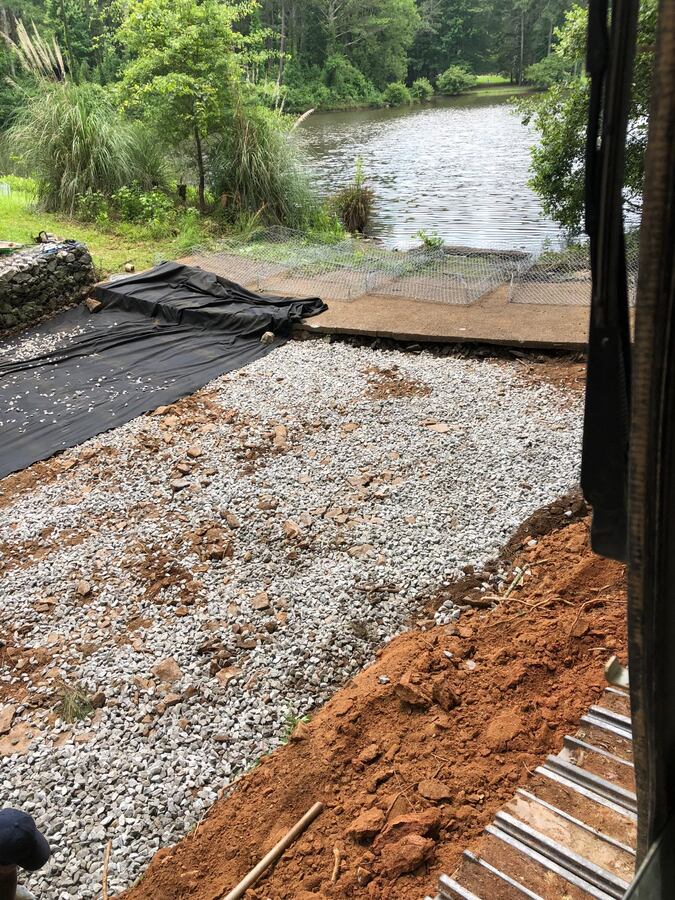
Maintaining clear flow paths is therefore an important part of spillway maintenance. If you’ve noticed concrete spalling, severe erosion, muddy seepage, or pipe joint separation, it’s time to call a reliable company to provide solutions. Work with a local company offering lake dredging services to resolve these problems.
Uncontrolled vegetation can complicate erosion management and lake dredging. While certain types of ground cover can help stabilize soil, uncontrolled plants can conceal areas where water is already washing soil away.
Erosion around a spillway can become particularly concerning because flowing water can gradually remove soil and affect slopes, channels, and embankments. Regular inspections and retention pond maintenance make it easier to distinguish beneficial vegetation from growth that is contributing to maintenance problems. Get in touch with a service provider that offers detention pond maintenance for help with managing vegetation growth on a spillway.
Dense vegetation can provide shelter for rodents, insects, and other wildlife. Burrowing animals can disturb soil and potentially contribute to erosion around embankments and drainage areas.
Overgrown areas can also make routine mowing, inspection, debris removal, and other maintenance tasks more difficult. The longer vegetation is allowed to grow unchecked, the more challenging and expensive management can become. It’s advisable to maintain a dense cover of short, well-maintained grass to prevent surface erosion. However, large bushes and trees are not recommended because their roots cause seepage paths and can lead to structural failure.
If you’re dealing with vegetation overgrowth on a spillway, now is the right time to call a lake management company. A site assessment can help you understand what needs to be done to keep your spillway in peak condition. Our team is equipped with modern tools to handle the problem and provide long-term maintenance. Contact us and we’ll help you protect your pond or lake.
Community lakes are often taken for granted until the water turns green, the fish die, and the shoreline starts to…
Retention ponds in HOA communities are important for flood prevention, controlling water flow, and filtering pollutants. When detention ponds…
Lakes naturally accumulate sediment over time due to stormwater runoff, shoreline erosion, and the decay of aquatic plants. Without…

Retention ponds are vital to managing stormwater and preventing flooding. Found in suburban neighborhoods, HOAs, roadsides, public parks, and commercial…