


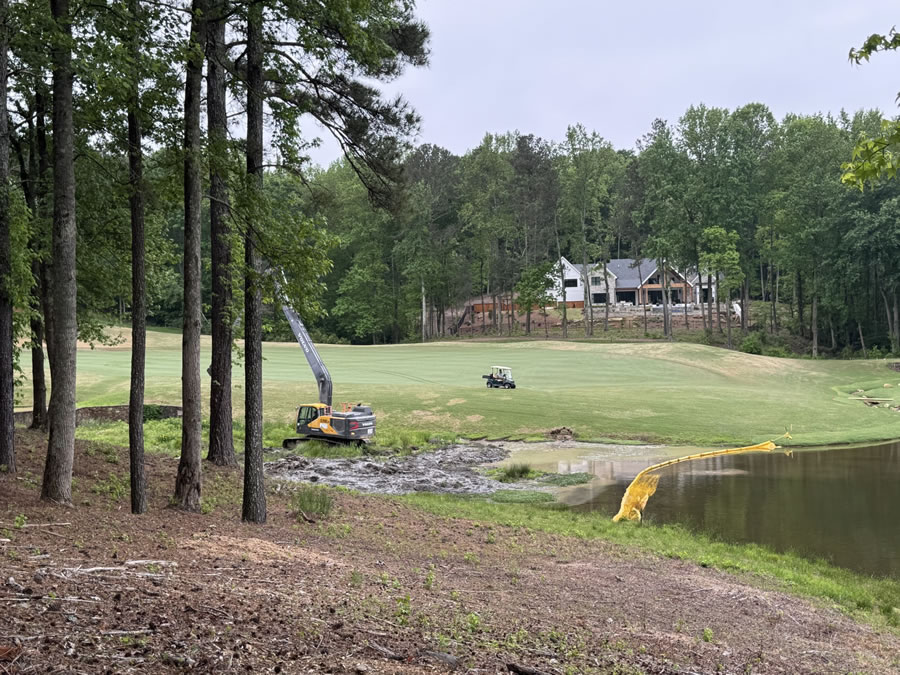
Dredging removes accumulated sediment, muck, sludge, and decaying organic debris from the bottom of a water body. This process is necessary to restore depth and capacity, improve water quality, and support aquatic life. If the built-up sediment is not removed in a timely manner, it can lead to loss of depth, uncontrolled algae growth, bad odors, poor water quality, and other issues. However, proactive lake management using diffused aeration and fountains can help reduce the conditions that contribute to these costly problems.
At Aquatic Restoration, we have been offering proactive lake dredging for over 35 years. In this post, we’ll explain how diffused aeration and fountains prevent costly dredging.
Sediment enters lakes through stormwater runoff, soil erosion, decaying vegetation, and other sources. Organic matter that settles on the bottom can decompose and consume dissolved oxygen, particularly when water circulation is poor. Low-oxygen conditions may encourage the release of nutrients from bottom sediments, contributing to algae growth and additional organic accumulation.
As sediment layers become thicker, the lake can lose depth and develop areas where water movement is restricted. Addressing these problems after extensive buildup has occurred may require heavy equipment, specialized labor, permits, and temporary disruption to the surrounding property.
Diffused aeration systems use an air pump, weighted tubing, and submerged diffusers to release small bubbles near the bottom of a lake. As the bubbles rise, they help move deeper water toward the surface and encourage circulation throughout the water column.

This circulation can improve oxygen distribution and support beneficial biological activity. With more oxygen available, naturally occurring microorganisms may be better able to break down certain types of organic matter before it accumulates into dense, problematic layers.
Diffused aeration does not remove existing sediment or eliminate every source of buildup. However, when combined with erosion control, retention pond maintenance, and other management practices, it can help maintain healthier water conditions and reduce the processes that contribute to sediment accumulation.
Decorative and aerating fountains can also improve water movement and oxygen exchange. By agitating the surface, fountains promote contact between water and air, which can increase oxygen transfer under suitable conditions. Their circulation patterns may also help reduce stagnant areas near the surface.
Fountains are particularly useful for improving the appearance of a property while supporting an overall lake management strategy. However, their effectiveness depends on the size, depth, shape, and specific conditions of the lake. A fountain alone may not provide sufficient circulation for deeper water, making a subsurface aeration system a more suitable choice in some situations.
Lake dredging remains an important option when sediment has already reached problematic levels, but it can be expensive and disruptive. Proactive aeration may help slow organic accumulation, support natural decomposition, and maintain better water conditions over time.
Property owners should also address contributing factors such as shoreline erosion, excessive fertilizer runoff, and unmanaged stormwater. Combining these measures with regular water-quality assessments and detention pond maintenance can provide a more complete approach to maintenance.
With our team of specialists and state-of-the-art tools, we strive to keep ponds and lakes in top shape. Our comprehensive range of services is designed to protect the health, beauty, and functionality of your pond or lake. Our team combines in-depth knowledge, practical hands-on experience, and specialized equipment to maintain healthy and functional water bodies in the areas we serve. Whether you need assistance with retention pond maintenance, water quality management, shoreline stabilization, or the installation of diffused aerators and fountains, we have what it takes to meet your needs. Contact us now and let’s create a management plan that delivers results.

Retention ponds help manage stormwater runoff, reduce flooding, and capture sediment before it reaches nearby waterways. However, retention pond maintenance…
.webp)
Stormwater management is an essential part of controlling rainwater runoff and protecting natural ecosystems. There are two options that often…

Dredging is an integral part of preserving a lake’s natural balance. Removing accumulated sand, silt, mud, and decaying organic debris…

A retention pond may become an environmental liability when it develops excessive algae, accumulates heavy sediment, suffers shoreline erosion,…