


A lake or pond can lose depth without an obvious change in its shoreline. Leaves, soil, sand, and other organic material settle on the bottom, creating layers of sediment that build up over time. Runoff from nearby properties can accelerate this process, particularly after heavy rain or construction activity. As sediment accumulates, the water body may become shallower, aquatic conditions can change, and recreational or operational uses may be affected. It’s advisable to recognize the warning signs so as to determine whether lake or pond dredging is needed.
One of the common signs of sediment accumulation is a noticeable reduction in depth, even when water levels appear normal. Areas that once accommodated boats may become difficult to navigate, while swimming or fishing spots may have less usable water. Docks and other shoreline structures can also become less practical as the bottom rises.
Comparing current depth measurements with older records can help confirm whether sediment is accumulating. If no previous measurements exist, a professional lake management company in Georgia can establish a baseline and identify areas where sediment buildup is most severe.
Shallow water allows sunlight to reach more of the pond bottom, creating favorable conditions for certain aquatic plants and algae. If vegetation is spreading into areas that previously remained relatively clear, sediment accumulation may be contributing to the change.
However, excessive plant growth does not automatically mean dredging is necessary. Nutrient-rich runoff, warm temperatures, and changes in water quality can also encourage vegetation. Testing the water and assessing the pond's depth can help determine whether sediment removal or detention pond maintenance would address part of the problem or whether additional management measures are needed.

Water that remains cloudy after rainfall may indicate that soil is washing into the lake or pond. You might also notice sediment collecting near drainage outlets, inlets, or the edges of the water body. Over time, these deposits can spread into deeper areas and reduce the pond's overall capacity.
Identifying where the sediment originates matters. If runoff continues carrying soil into the pond, dredging alone may provide only temporary improvement. Stabilizing exposed soil, managing drainage, and establishing suitable vegetation around the shoreline can help limit future sediment deposits. These tasks should be handled by a professional lake management company.
As sediment fills the bottom, a pond loses some of its capacity to store water. This can affect stormwater management ponds that are designed to hold runoff, as well as recreational lakes that depend on adequate depth for boating and other activities.
Organic material decomposing in accumulated sediment may also release nutrients into the water. Under certain conditions, this can contribute to algae growth, unpleasant odors, or reduced dissolved oxygen. These symptoms have several possible causes, so water-quality testing and retention pond maintenance may be necessary before deciding on a dredging project.
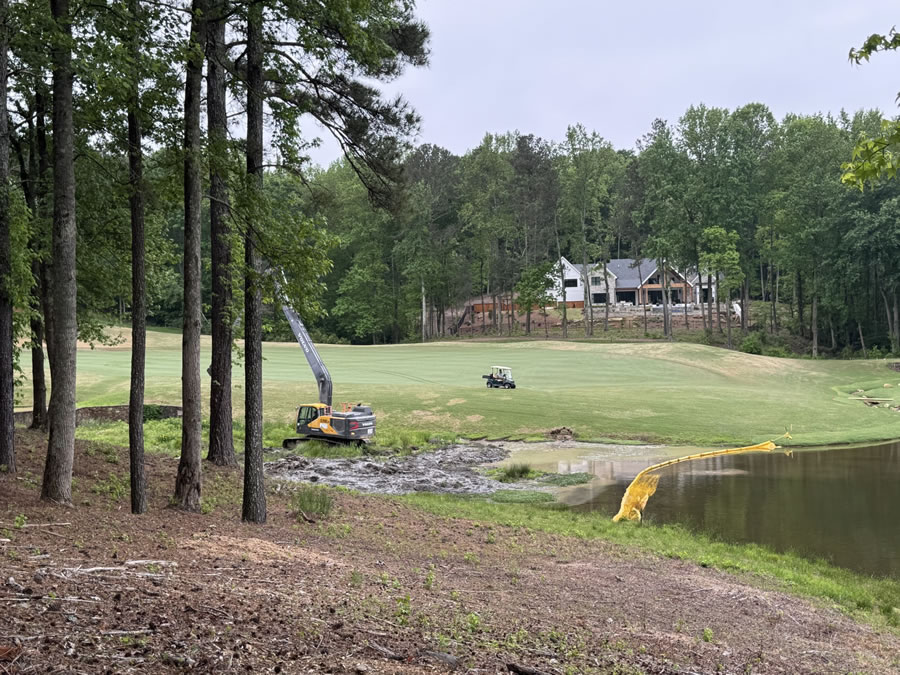
Lake dredging removes accumulated sediment to restore depth or improve water storage capacity. Depending on the site, the process may involve mechanical excavation or hydraulic dredging, which uses specialized equipment to remove sediment as a slurry. The appropriate method depends on pond size, sediment characteristics, site access, environmental conditions, and how the removed material will be handled.
Before work begins, property owners should consider permits, sediment testing, drainage conditions, and potential effects on aquatic habitats. A professional assessment by a trusted lake management service provider can establish how much sediment needs removal and whether dredging is the most suitable solution.
If your lake or pond appears to be losing water depth or the water is murky, dredging may be the solution. Lake dredging restores depth, improves water quality, controls algae growth, and mitigates flooding risks. Aquatic Restoration is a local company offering a wide range of services, including lake dredging, siphon installation, shoreline stabilization, retention pond maintenance, and more. Our team is equipped with state-of-the-art tools, and we always go the extra mile to get the job done right the first time. Book your appointment today.

Detention ponds play an important role in managing stormwater runoff on commercial properties, residential developments, apartment communities, and other managed…
.webp)
A beautiful community lake can be one of an HOA's biggest attractions. It gives residents a peaceful place to relax,…

A lake may look clean from the shoreline, but what happens beneath the surface can tell a different story. Over…

Retention ponds help manage stormwater runoff, reduce flooding, and capture sediment before it reaches nearby waterways. However, retention pond…