


A lake may look clean from the shoreline, but what happens beneath the surface can tell a different story. Over time, soil, decaying leaves, organic waste, and runoff settle on the bottom, reducing water depth and changing the lake’s natural balance. This process, known as sediment accumulation, can affect water quality, aquatic habitats, and the lake’s ability to support recreational activities. Without proper lake management, excessive sediment can turn a healthy water body into a shallow, murky environment. Let’s look at how lake dredging can help.
Sediment enters lakes through several pathways, including erosion from nearby land, stormwater runoff, construction sites, and inflowing streams. Organic matter from aquatic plants and other natural debris also settles at the bottom as it decomposes. Although some sediment is part of a normal ecosystem, excessive accumulation can create serious challenges.
As sediment builds up, the lake becomes shallower, reducing its capacity to hold water. This can affect water circulation, increase the likelihood of nuisance vegetation growth in shallow areas, and limit habitat for fish and other aquatic organisms. Fine particles suspended in the water can also reduce clarity, making it harder for sunlight to penetrate to the depths needed by certain aquatic plants.
One of the concerns is the way accumulated sediment can store and release nutrients. Phosphorus, for example, may become trapped in bottom deposits and later enter the water under certain chemical conditions. Excess nutrients can encourage algae blooms, which may reduce oxygen levels as the algae decompose. Severe oxygen depletion can stress or kill fish and other aquatic life.
Sediment may also contain pollutants carried by runoff, including certain metals, pesticides, and other contaminants. Their presence depends on the surrounding land use and the sources feeding the lake. This is why retention pond maintenance and sediment management should not rely on appearance alone. Water testing and, where appropriate, sediment analysis can help determine whether contamination or nutrient enrichment is contributing to declining water quality.

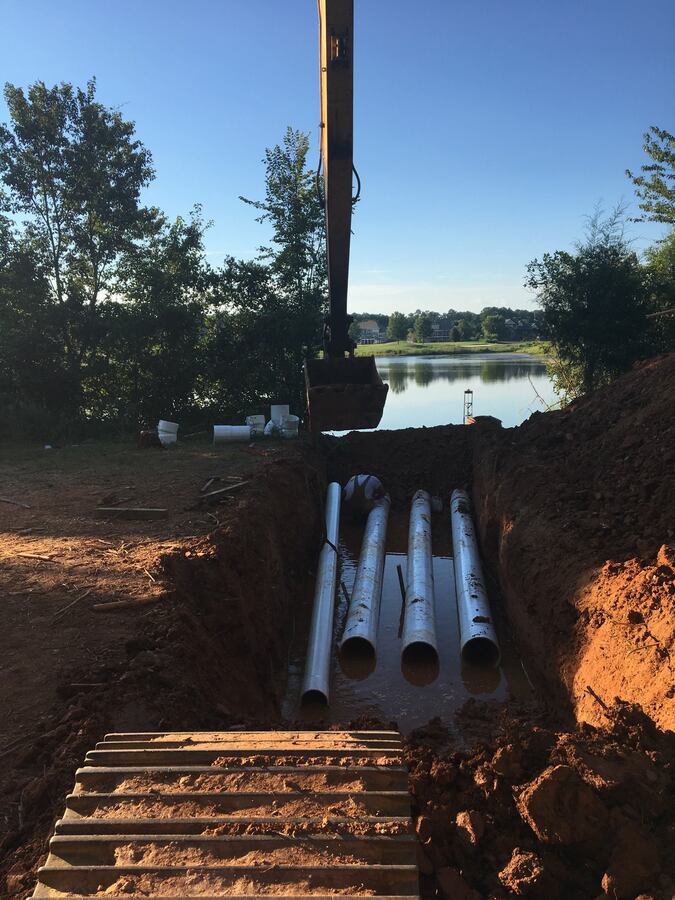
Dredging involves removing accumulated sediment from the bottom of a lake or pond. Depending on the site, contractors may use mechanical equipment to excavate material or hydraulic methods to pump sediment and water through a pipeline to a designated containment or disposal area.
Retention pond maintenance and removing excess deposits can restore lost depth, improve water storage capacity, and reopen channels or areas that have become filled with sediment. It may also remove nutrient-rich bottom material that contributes to ongoing water quality problems. However, dredging is not a universal cure. Disturbing sediment can temporarily increase turbidity, and contaminated material requires appropriate handling and disposal. A detailed assessment helps determine where removal is needed and which method best suits the site.
Dredging addresses sediment that has already accumulated, but controlling the sources of new deposits is equally important. Stabilizing exposed soil, maintaining vegetated shoreline buffers, managing stormwater runoff, and reducing erosion in the surrounding watershed can limit the amount of material entering the lake.
Regular depth surveys, detention pond maintenance, and water quality testing can help property managers track changes over time and identify developing problems before they become severe.
Lake dredging restores depth, improves water quality, and protects ecosystems. With so many lake management companies in Georgia available, it can be confusing selecting the right service provider for your project. Fortunately, the team at Aquatic Restoration takes the hassle out of lake dredging by going above and beyond to provide excellent services. Our company has been in business for over 35 years, and our team consists of experienced technicians. Our track record speaks for itself, and we stand behind our work with a 100% satisfaction guarantee.

Detention ponds play an important role in managing stormwater runoff on commercial properties, residential developments, apartment communities, and other managed…
.webp)
A beautiful community lake can be one of an HOA's biggest attractions. It gives residents a peaceful place to relax,…

A lake or pond can lose depth without an obvious change in its shoreline. Leaves, soil, sand, and other organic…

Retention ponds help manage stormwater runoff, reduce flooding, and capture sediment before it reaches nearby waterways. However, retention pond…